Kisan AI · Regenerative Rural Transformation Framework
One field. Four regenerations.
Rural decline is not a single-sector problem — so the answer cannot be a single-sector intervention. The framework converts fragmented rural assets into one coordinated, measurable system: economically productive, ecologically regenerative, socially resilient. Proven on a 657-acre reference implementation at Project Chittoor. Built to replicate from village to state.
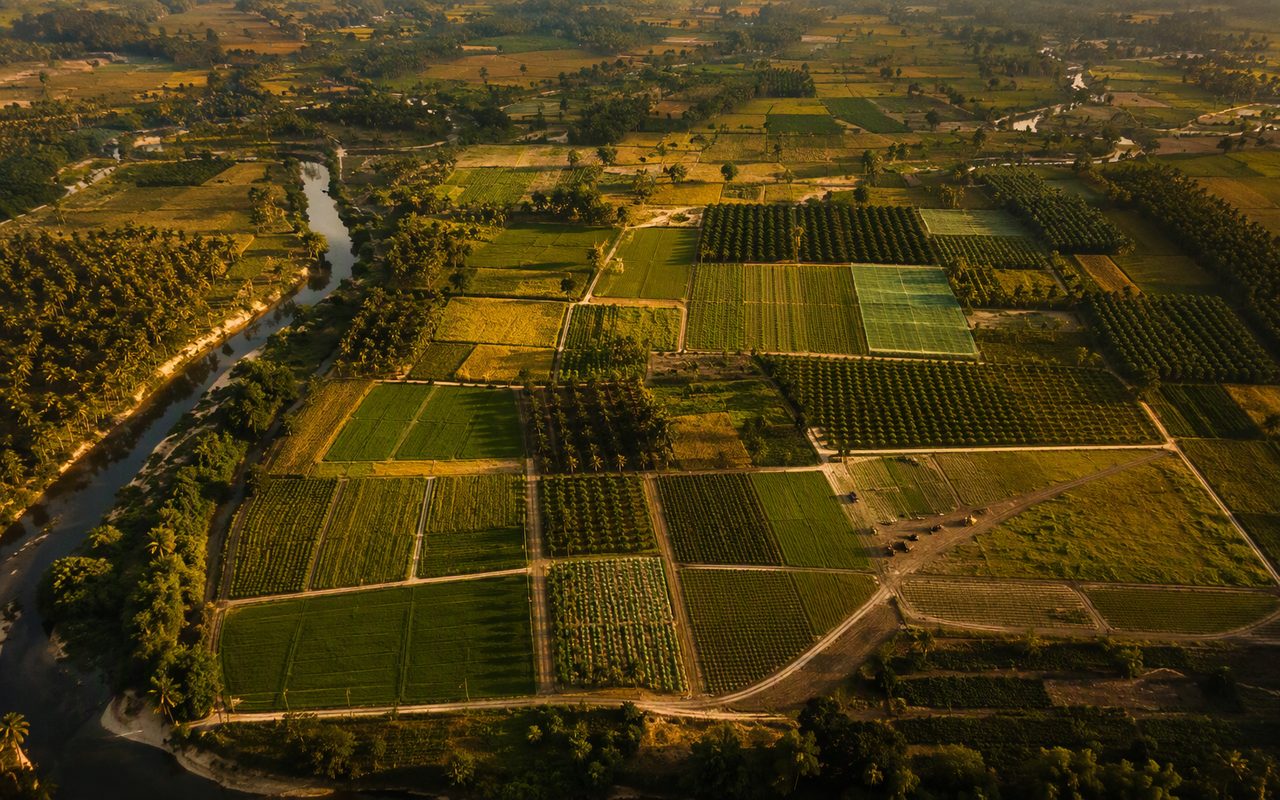
I — Economic regeneration
Economy
A rural balance sheet should never depend on a single harvest. Income is diversified across agriculture and horticulture, livestock, agroforestry, renewable energy, processing, logistics, ecotourism, and local enterprise — while the land stays in the hands of its owners. Individual ownership, collective scale: shared infrastructure gives small holdings the economics of a large estate, and value stops leaving the village.
- Revenue engines
- 9+ diversified streams
- Ownership
- Retained · collectively operated
- Reference
- 657 acres · Project Chittoor
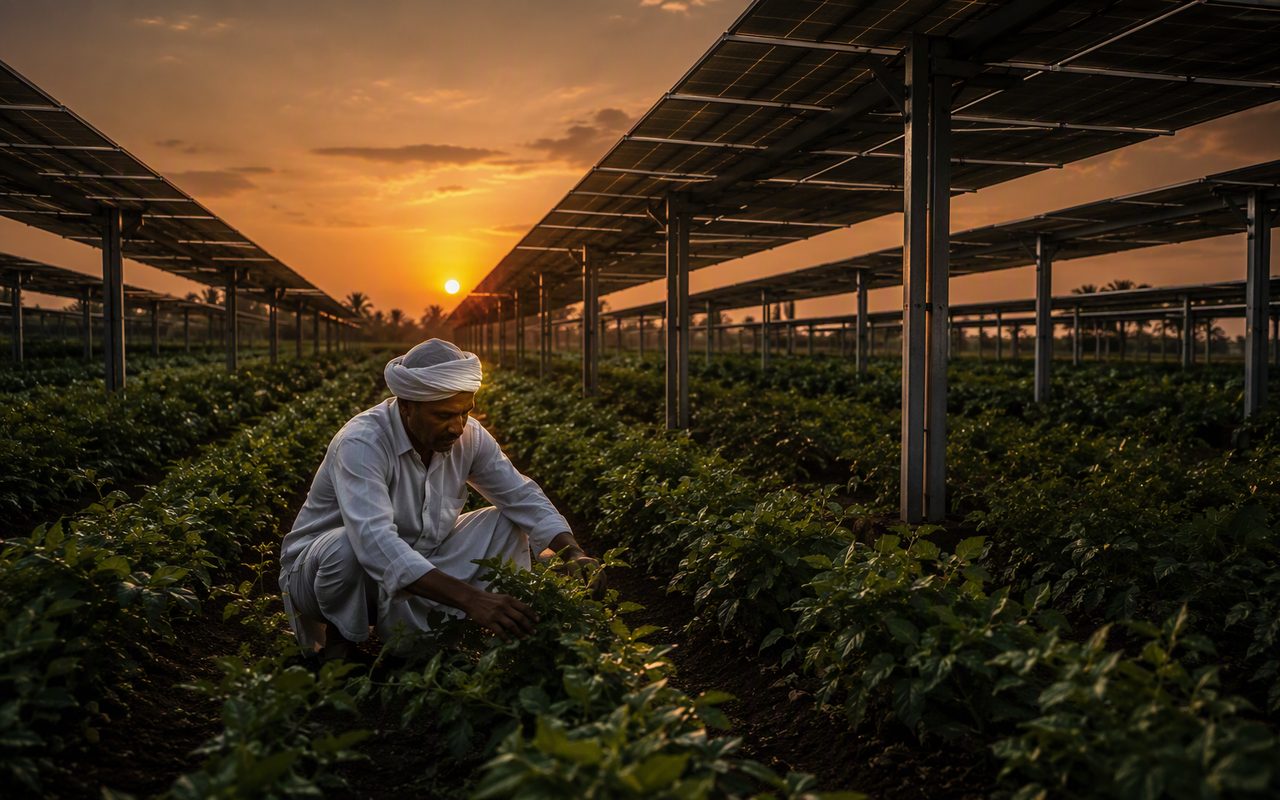
II — Ecological regeneration
Ecology
Regeneration is an operating target, not a slogan. Three resource loops are closed and instrumented — soil: residues, manure, rotation, and biological inputs return as fertility. Water: harvesting, recharge, storage, and budgeting make every acre climate-resilient. Energy: solar generation powers farms and processing, and the surplus becomes revenue. Each cycle leaves the underlying asset healthier than it began.
- Closed loops
- Soil · water · energy
- Method
- Instrumented, not described
- Direction
- Improve an asset every cycle
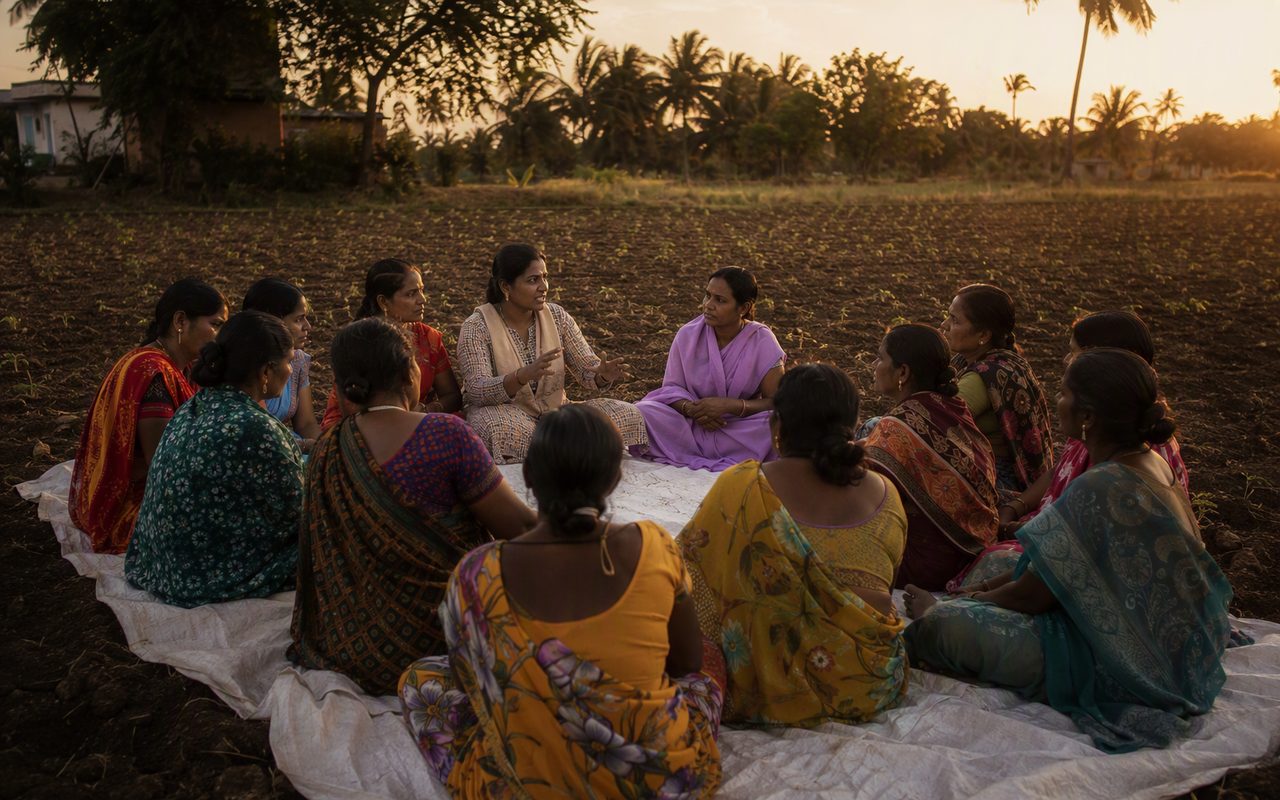
III — Social regeneration
Community
Human capability is infrastructure. Education, skills, women's and youth participation, and practical digital literacy are built into the operating model, because no physical system scales without local capability. Technology adapts to the field workforce — voice-first, photo-first, role-specific — so the barrier is never literacy. The measure of success: aspiration stays in the village, and migration becomes a choice rather than a compulsion.
- Principle
- Capability is infrastructure
- Interface
- Voice-first · photo-first
- Goal
- End forced migration
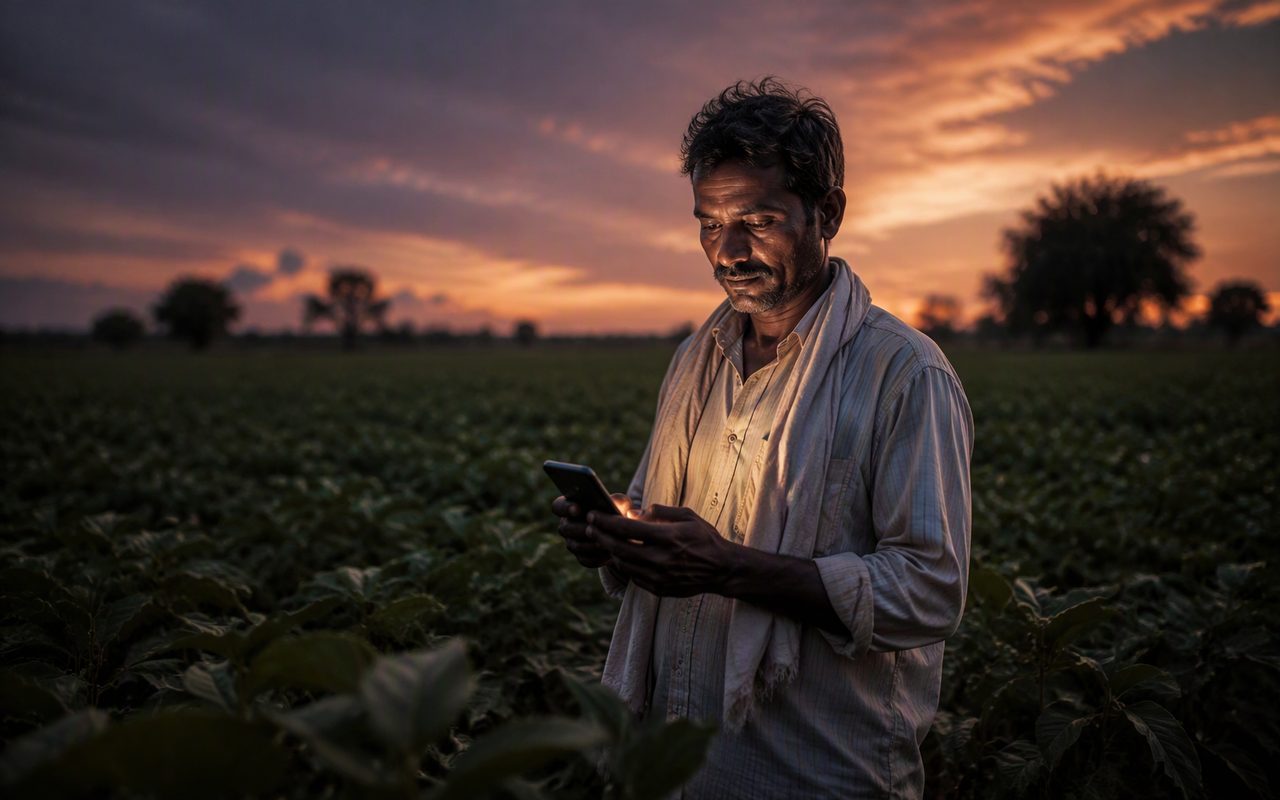
IV — Digital regeneration
Intelligence
Beneath the field runs the Rural Transformation OS — nine
domains, seven operating layers, one common data model. Every task leaves evidence and
every claim traces to a dated baseline, while AI advisory, anomaly detection, and
program-level risk sensing turn daily field activity into evidence-grade institutional
outcomes. Deployment follows a gated method:
Diagnose → Baseline → Design → Build → Operate → Measure → Replicate.
- Architecture
- 9 domains · layers A–G
- Evidence
- Gates 0–6 before scale
- Standard
- Comparable KPIs, everywhere
Working today — not a pilot proposal
Proof, not promises.
Every system described here is already running on the ground at Project Chittoor — measured against dated baselines, recorded in open books, and open to visitors who want to check.
Evidence before replication.
A successful deployment demonstrates four forms of portability — operational, technological, evidentiary, institutional — so a new geography never starts from zero. Kisan AI provides the framework and the technology. Governments, development institutions, and implementation partners put it to work locally.
- Framework
- RRTF v1.0 · owned by Kisan AI
- Reference client
- Project Chittoor Trust · 657 acres
- Method
- Diagnose → Baseline → Design → Mobilize → Build → Operate → Digitize → Measure → Validate → Standardize → Replicate
- Portability
- Operational · technology · evidence · institutional
- Deployment
- State · district · village · international